
We have made it to the 11th episode of the harmonising hormones series with just a few left! A sincere to thank you to all who have been following along so far. This one will hopefully answer the questions I get asked a lot about metabolism and why it seems to slow down as we age.
In short; yes, your metabolism will slow down as you age and enter menopause. Why? As we get older we are more likely to have reduced insulin sensitivity, reduced muscle muss, reduced physical activity, lower hormonal output levels and mitochondria that has suffered oxidative stress. These are five key areas that actually make a difference to your metabolism and guess what! You get to make a difference to them! Staring the biological clock in the face and taking a few hits back! So forget the skinny teas and other pseudo science products that claim to ‘rev up’ your metabolism and say hello to actionable, science directed protocols.
First, a little education, then some tips and myth busting.
Thyroid hormones T3 and T4
What roles do they play in the body?
By way of its control over body temperature, breathing, digestion, including proper absorption of nutrients and heart rate, thyroid can be thought of as your metabolism regulator. Think calorie burning or your metabolism as the rate at which our cells use energy. This explains why a down regulated thyroid can lead to weight gain and a lack of energy.
It’s secondary functions include regulating the immune system, maintenance of bone health, glucose and blood sugar control, aiding liver detoxification, it plays a role in cholesterol and helps to balance out other sex hormones. All critical functions that you want operating at their best so you can too!
Your thyroid and the hormones it produces are part of a delicate system that can be disrupted by environmental toxins such as heavy metals, fluoride, pesticides, phthalates, parabens, halogens which cause inflammation and block thyroid hormone receptors, preventing t3 and t4 from doing their jobs. How do we know if our thyroid hormones are out of whack? If you can answer 5 or more to any of the below (out of each bucket) then you may want to follow up and get some professional assistance in rebalancing.
Hypothyroidism (not enough thyroid) feels like
- fatigue
- thinning hair
- goiters (enlarged thyroid)
- irregluler periods
- weight gain
- muscle cramps
- inability to fully evacuate when pooping
- irritable or moody
- thin or dry skin
- depression or depressed mood
- fluid retention
- recurrent headaches
- high cholesterol
- decreased ability to sweat & increased sensitivity to cold
Hyperthyroidism (too much)
- weight loss
- heat intolerance
- diarrhea
- insomnia
- erratic heart rate
- muscle pains
- sense of unease or anxiety
- elevated blood sugar levels
- a change in appetite
- increased sweating
How can you balance and optimise?
Using nutrition: Balancing your macronutrients which means adequate amounts of carbohydrate, protein and fats, chronically low carbs will down regulate your thyroid. 200mcg/day of selenium which is found in two brazil nuts and 140mcg/day of iodine are important to be consumed in optimal amounts, not too little and not too much. 200-300 mg of tyrosine is also needed for thyroid production which can be supplemented or found in red meats and parmesan cheese. Other critical nutrients include iron (14mg/day), zinc (20mg/day), vitamin d(600iud/day) and vitamin a (800mcg/day). Iodised salt, eating red meat 2-3 times a week and eggs are great foods to support thyroid function.
Using exercise: 30 minute bouts of cardio exercise a couple times a week and strength training 3 times a week is ideal for building muscle and increasing resilience to stress to balance out this hormone.
Using other behaviours: Ensure you are getting enough exposure to natural light throughout the day for enhanced hormone production and balance. Do you best to avoid stress or increase your resilience to stress. Get enough sleep and invest in your psychological well being and stress management.
Avoid: processed carbohydrates, simple sugars, more than 2 standard drinks a week will interfere with hormone productions as will caffeine and the above mentioned environmental toxins.
Supplementation:
Bladderwrack (avoid if your thyroid is too high, it is a source of iodine.)
Fish oil (800mg-1g omega 3s),
Chaste berry or vitex (500-1000mg/day)
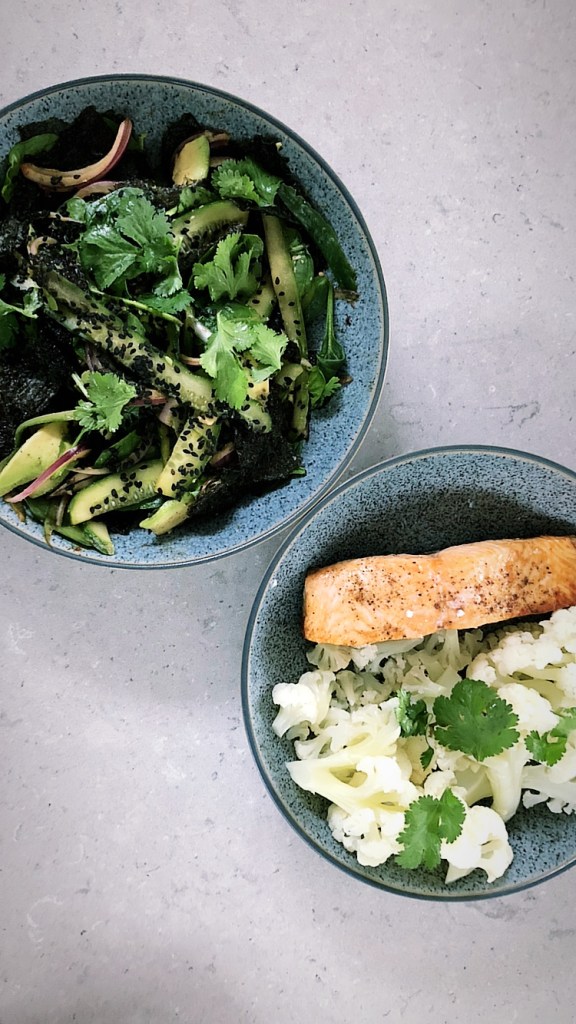
Salads are a great way to load up on micronutrients for thyroid health! Try:
- Seaweed
- soft herbs
- avocado
- nuts and seeds
- high quality protein sources such as salmon
As powerful add ins.

A bit more on metabolism:
Your metabolism is essentially a chemical equation of food in (chemical energy), the food being used as a fuel source in the form of ATP (chemical reaction) and the waste products being expelled either through your digestive tract or as the air your breath out. This gives us important signals and clues as to how we can boost this process for a healthy metabolic rate and reducing risk of metabolic related heart disease etc.
First! The chemical energy and how we consume it
Eating the best quality fuel is what keeps our engines running smoothly and prevents oxidative stress to our mitochondria. Mitochondria being the power pack in our cells which use the energy from food and turn it into energy we can burn in physical, mental and everyday activities. Eating hyper processed foods or eating too often will slow down this process as our body then becomes less sensitive to insulin, thereby struggling to shuttle nutrients to the right places and instead storing them as fat. Sugar and snacks, we’re looking at you. This will be covered more in part 12 of the series on insulin and blood glucose management.
Second, the chemical reaction and how to fire it up
A well functioning digestive system is the start. You need to be able to digest nutrients properly in order to use it as fuel. You also want to have a good amount of lean muscle that is capable of processing these nutrients and optimising your metabolism. Going deeper is the mitochondria which convert the food energy into usable energy. You can support your mitochondria through a low inflammatory diet, supplements like coq10 and N-actyle cystine. Cold exposure is also an epic tool in the arsenal of metabolism boosting. Cold showers, plunges and ocean swims all make excellent options.
There will also never be anything as effective or necessary as movement. Get your heart rate up and lift heavy things!
You will burn calories during exercise and also following in a process called post-exercise oxygen consumption whereby your body recovers from its exertion. Walking after meals and taking opportunities to move will also fire it back up during the day.

We have gotten into a lot today but it doesn’t need to be overwhelming. I’m here to simplify and guide you through what you need to know to balance your hormones, unleash your best health and help you make the most of your day!
Reach out by following the link below and we can make a start today.
Further research and reading
Akash, M. S. Hamid., Rehman, Kanwal., & Hashmi, M. Zaffar. (Eds.). (2021). Endocrine disrupting chemicals-induced metabolic disorders and treatment strategies (1st ed. 2021.). Springer International Publishing. https://doi.org/10.1007/978-3-030-45923-9
Bagchi, D., Nair, S., & Sen, C. K. (Eds.). (2019). Nutrition and enhanced sports performance : muscle building, endurance, and strength (Second edition.). Academic Press, an imprint of Elsevier.
Calder, P. C., & Yaqoob, P. (Eds.). (2013). Diet, immunity and inflammation. Woodhead Publishing.
Guerin, G. D., Zumbro, E. L., Gordon, R. A., White, C. M., McAdams, D. M., Sokoloski, M. L., Nichols, D. L., & Duplanty, A. A. (2020). Dysregulated Thyroid Hormone Metabolism Following Formoterol Stimulation In Thyroid Hormone Depleted Skeletal Muscle: 3317 Board #138 May 29 1:30 PM – 3:00 PM. Medicine and Science in Sports and Exercise, 52(7 Suppl), 908–908. https://doi.org/10.1249/01.mss.0000685420.24493.06
Kuś, A., Marouli, E., Del Greco M, F., Chaker, L., Bednarczuk, T., Peeters, R. P., Teumer, A., Medici, M., & Deloukas, P. (2021). Variation in Normal Range Thyroid Function Affects Serum Cholesterol Levels, Blood Pressure, and Type 2 Diabetes Risk: A Mendelian Randomization Study. Thyroid (New York, N.Y.), 31(5), 721–731. https://doi.org/10.1089/thy.2020.0393
Suratman, S., & Suhartono, S. (2022). PESTICIDES EXPOSURE AND THYROID HORMONE LEVELS AMONG AGRICULTURAL WORKERS AND PESTICIDE APPLICATORS: A SYSTEMATIC REVIEW. Jurnal Kesehatan Lingkungan (Surabaya. Online), 14(3), 178–192. https://doi.org/10.20473/jkl.v14i3.2022.178-192
 SaeYond Health