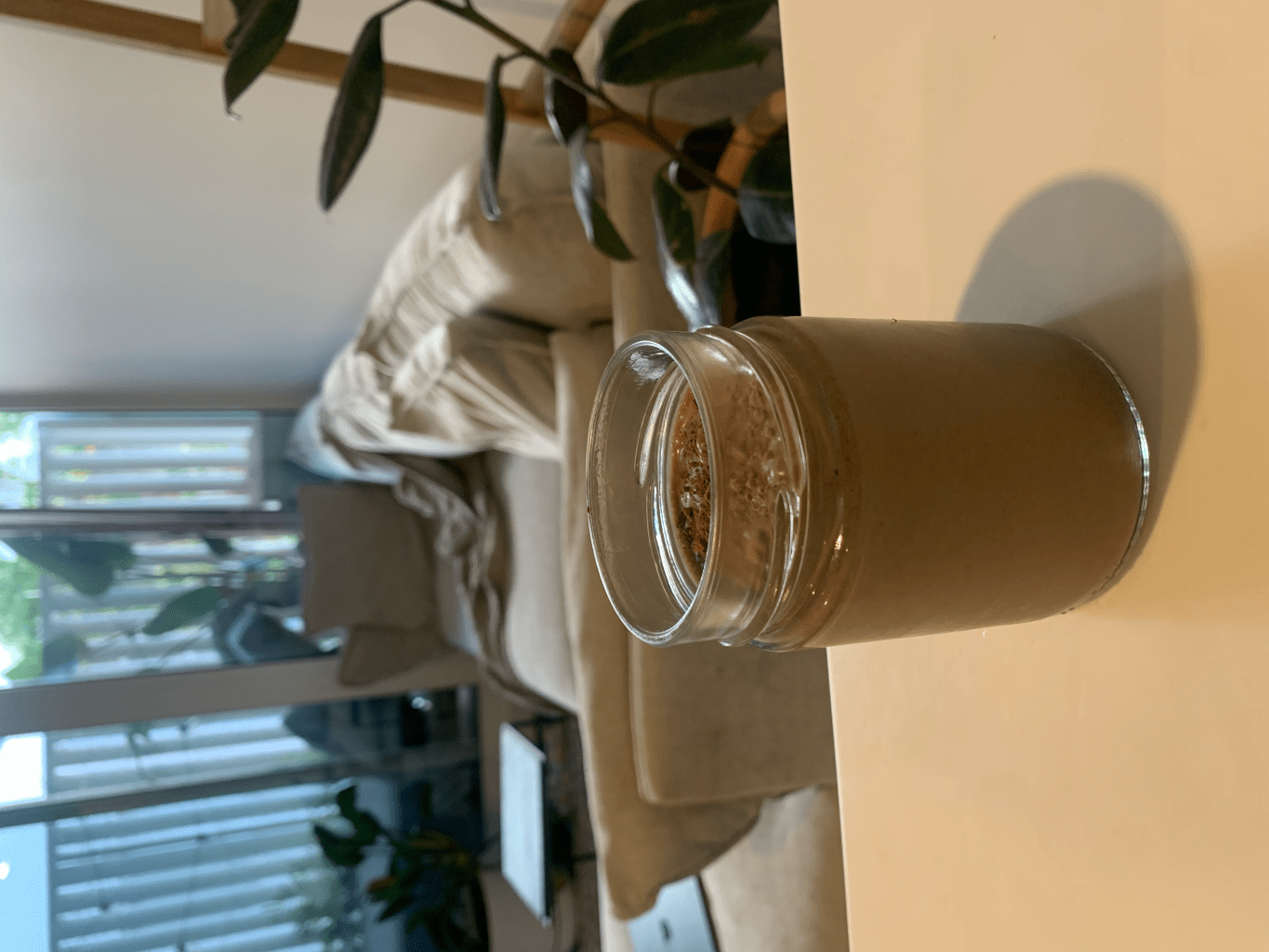
You are reading part 7 of the harmonising hormones series! The intention of this post is to simplify the conflicting advice on caffeine consumption by presenting you with the facts, and some things to keep in mind so you can build awareness of your body’s cues and decipher what they mean for making decisions that are right for you.
This post is to empower you to make informed decisions and craft delicious alternatives. It is not to guilt you, tell you what to do or strike fear into the hearts of those waiting in line at their local coffee shop. However given the very real evidence demonstrating coffee’s affect on fertility, mental health and the significance this has on women’s wellbeing and a couple’s family goals I couldn’t not share what I have learned. Read the personal note at the end for more on finding a balance and knowing what serves you best.
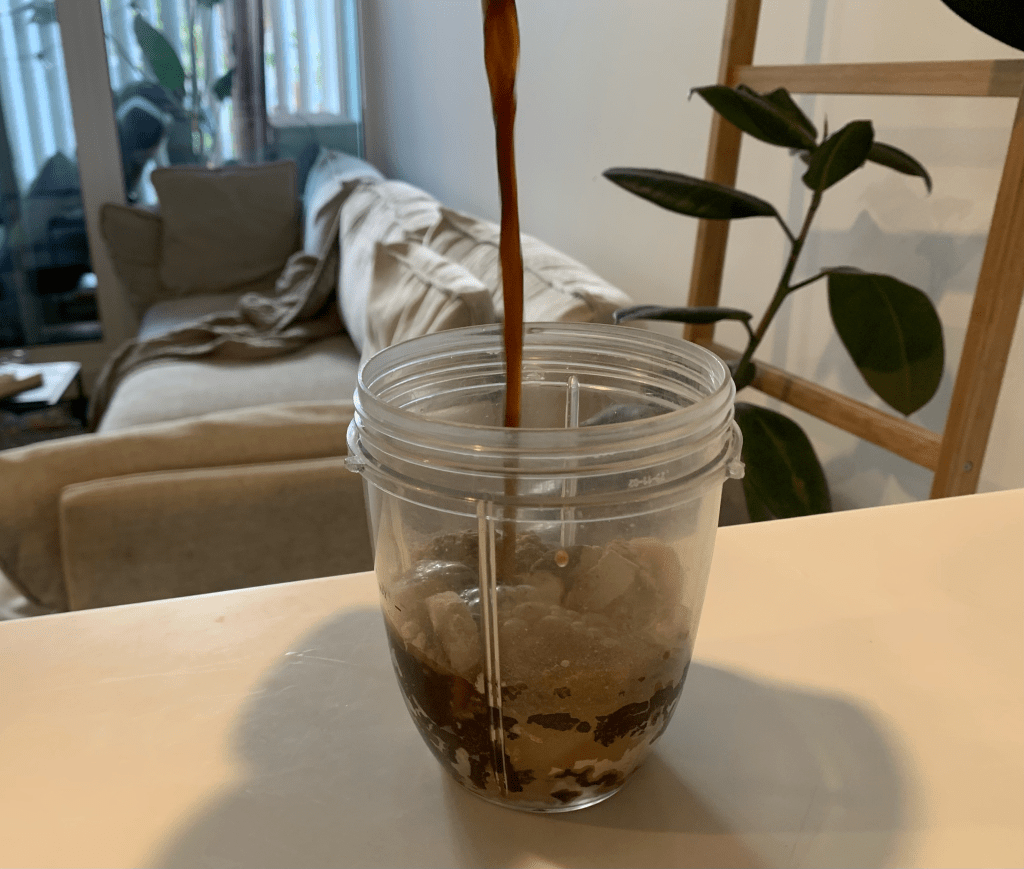
First…. the recipe for world’s creamiest, frothiest, decaf iced coffee
- 1 cup cold filter decaf coffee (I used Dark Knight beans from Decaf Coffee Co, they’re local, ethical and super tasty, no affiliation, just appreciation).
- 1/2 frozen banana
- 1/2 cup soy milk
- 1 tbsp protein powder (I like Amazonia’s vegan cinnamon and vanilla powder but I’m not committed to it and enjoy mixing it up).
- 1tsp maca powder
- 1 tsp lions mane mushroom powder
- pinch of cinnamon
- yesssss to cacao powder sprinkle on top
Simple brew beans according to filter instructions and chill in the fridge for 3h plus. Then, blend the above ingredients. Sprinkle a touch of cacao powder atop if you wish for a depthful flavour bomb on those first sips.
Wait… What is coffee doing to my hormones?
Everyone has a different tolerance for caffeine. Things like genetics, lifestyle and stress, liver function, feeding schedule, nutrition and exercise will all play a role in how your body processes caffeine. This process will in turn affect hormone production and balance. How does this work? Caffeine promotes the production of cortisol, otherwise known at adrenaline. If your body is producing excess cortisol, it is to the detriment of other important hormones such as:
- Progesterone decreases which plays a role in sleep, mood and keeping any potentially fertilised egg implanted into your uterine lining (read the links below for more on the connection between coffee, miscarriage and anxiety. Yes, there is aboslultey a proven connection between infertility, miscarriage and caffeine consumption which needs more attention given the high exposure, prevalence and the significant consequences of this relationship).
- Oestrogen decreases which is vital for mood, sex drive, decision making and fertility.
- Thyroid is affected which regulates metabolism, temperature control, mood and digestion.
Why does it do this? Your body is always going to prioritise cortisol hormone over all other because it is essential in the fight or flight survival response which served your ancient ancestors. Thousands of years ago, if a lion was chasing you, you wanted the cortisol to release energy, spike anxiety and get you to safety. So your body prioritising this hormone over the others made sense. Today, we are artificially provoking this cortisol response and depressing other hormones and this has systematic consequences to our health, especially female health.
As mentioned above, everyone’s response to caffeine is different and some people can get away with it in moderate amounts. However, if you ever feel buzzed and anxious, stressed and overwhelmed, if your sleep and mood suffers, if your sex drive and motivation levels are dipping, if you experience infertility or weight management issues then considering caffeine alternatives is a wonderful idea that your body and hormones will thank you for.
A personal note: Coffee served me reasonably well for 10 plus years as a delicious beverage I looked forward to drinking. It was a study aid, point of connection with friends, athletic performance enhancer and hobby. I have deep interest in the history, geography, craftsmanship and varieties of this bean. Today, caffeine no longer serves me. Spiking my cortisol at the expense of other hormone production is something that affects my sleep, afternoon motivation levels, mood and fertility. So! Whilst its been fun, sipping on the brewed bean… My goals have evolved and as such, caffeine no longer has a place in my life, I can imagine it could again in super small amounts one day but in the meantime I feel far better off it and love getting creative with other options! Decaf works for me as I still feel in routine, appreciate the flavour profile and get to support a local business.
If you need someone on your team to develop a personalised process for your hormone health, then reach out! I would love to hear from you.
Further resources and reading:
Aluko, R. (2012). Functional foods and nutraceuticals (1st ed. 2012.). Springer. https://doi.org/10.1007/978-1-4614-3480-1
Brent, R. L., Christian, M. S., & Diener, R. M. (2011). Evaluation of the reproductive and developmental risks of caffeine. Birth Defects Research. Part B. Developmental and Reproductive Toxicology, 92(2), 152–187. https://doi.org/10.1002/bdrb.20288
Dashwood, R. H., Duncan, A. M., Hagen, T. M., Hu, F. B., Johnson, E. J., Jones, P. J. H., Joshipura, K., Jump, D. B., Klurfeld, D. M., Lampe, J. W., Lawson, L. D., Liu, S., Steward, W. P., Stocker, R., Williams, D. E., Yang, C. S., & Zeisel, S. H. (2013). An Evidence-based Approach to Phytochemicals and Other Dietary Factors (Jane. Higdon & V. J. Drake, Eds.; Second edition.). Thieme. https://doi.org/10.1055/b-002-76301
Goto, A., Song, Y., Chen, B. H., Manson, J. E., Buring, J. E., & Liu, S. (2011). Coffee and caffeine consumption in relation to sex hormone-binding globulin and risk of type 2 diabetes in postmenopausal women. Diabetes (New York, N.Y.), 60(1), 269–275. https://doi.org/10.2337/db10-1193
Hirose, K., Niwa, Y., Wakai, K., Matsuo, K., Nakanishi, T., & Tajima, K. (2007). Coffee consumption and the risk of endometrial cancer: Evidence from a case‐control study of female hormone‐related cancers in Japan. Cancer Science, 98(3), 411–415. https://doi.org/10.1111/j.1349-7006.2007.00391.x
Johnston, K. L., Clifford, M. N., & Morgan, L. M. (2003). Coffee acutely modifies gastrointestinal hormone secretion and glucose tolerance in humans: glycemic effects of chlorogenic acid and caffeine. The American Journal of Clinical Nutrition, 78(4), 728–733. https://doi.org/10.1093/ajcn/78.4.728
Leviton, A., & Cowan, L. (2002). A review of the literature relating caffeine consumption by women to their risk of reproductive hazards. Food and Chemical Toxicology, 40(9), 1271–1310. https://doi.org/10.1016/S0278-6915(02)00092-3
Lyngsø, J., Ramlau-Hansen, C. H., Bay, B., Ingerslev, H. J., Hulman, A., & Kesmodel, U. S. (2017). Association between coffee or caffeine consumption and fecundity and fertility: A systematic review and dose-response meta-analysis. Clinical Epidemiology, 9, 699–719. https://doi.org/10.2147/CLEP.S146496
Pollack, A. Z., Buck Louis, G. M., Sundaram, R., & Lum, K. J. (2010). Caffeine consumption and miscarriage: a prospective cohort study. Fertility and Sterility, 93(1), 304–306. https://doi.org/10.1016/j.fertnstert.2009.07.992
Savitz, D. A., Chan, R. L., Herring, A. H., Howards, P. P., & Hartmann, K. E. (2008). Caffeine and Miscarriage Risk. Epidemiology (Cambridge, Mass.), 19(1), 55–62. https://doi.org/10.1097/EDE.0b013e31815c09b9
Wedick, N. M., Mantzoros, C. S., Ding, E. L., Brennan, A. M., Rosner, B., Rimm, E. B., Hu, F. B., & Van Dam, R. M. (2012). The effects of caffeinated and decaffeinated coffee on sex hormone-binding globulin and endogenous sex hormone levels: A randomized controlled trial. Nutrition Journal, 11(1), 86–86. https://doi.org/10.1186/1475-2891-11-86
 SaeYond Health