No one likes feeling out of control with their food choices or out of touch with what their body really needs. Having a good idea of your energy needs and the ability to self-regulate your own appetite is an incredibly helpful tool for achieving a healthy weight and body composition.
We’ve all heard the calories in, calories out formula. If you want to lose weight, consume less calories than you burn. Counting and tracking however can be time consuming, some of us find it stressful and often it is difficult to do in social situations. I’m here to free you from the worrying and equip you with tools to help you on your way to better appetite regulation and eating for your needs.
Get a foundational idea of higher calories foods and low calories foods and then stock up on a bounty as much nutritional, lower calorie foods as you want!
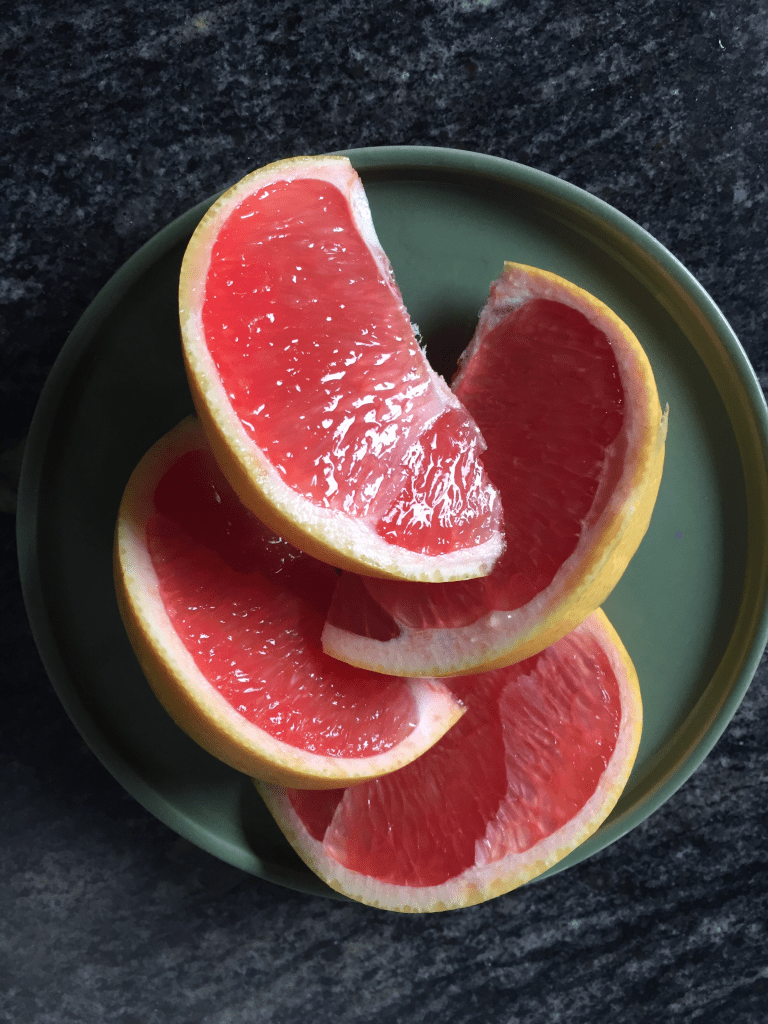
- Eat as much:
- grapefruit, oranges and berries
- carrots, fennel, celery sticks, lettuce, tomatoes, cucumbers, soft herbs
- mushrooms, grilled eggplant, pumpkin, broccoli, cauliflower, brussell sprouts, spinach etc
As you want! Get creative, find recipes, roast, sizzle, bake and BBQ these delicious and low calorie foods to your heart’s content, aiming to make at least half your plate full of them.
This will help you achieve satiety earlier in your meal by giving your stomach a feeling of fullness which can be communicated to your brain that you are having enough food.

Make high quality protein the star of your meal. This will help send feelings of satisfaction through your body sooner and help you to feel fuller longer.
Aim for a palm sized portion of:
- salmon, eggs, tempeh, chicken, tofu or lean cut red meat.
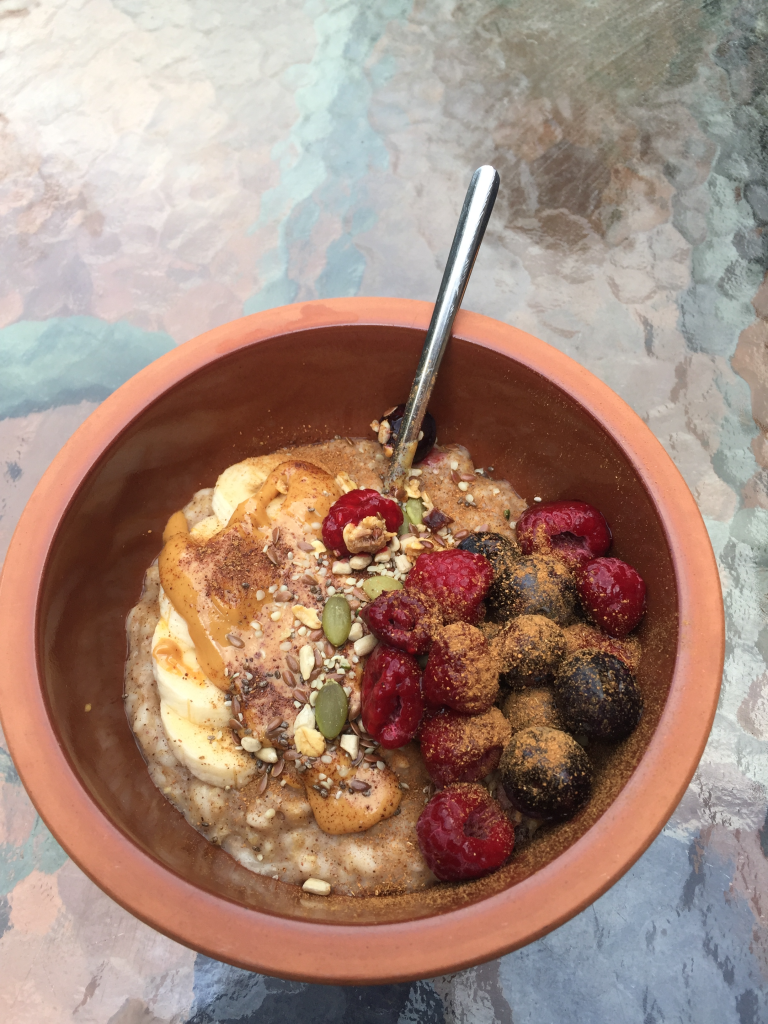
Be smart about your carbohydrate choices, choose minimally processed and use you hand as a guide, what could you fit in one handful?
- oats, rice, potato, pearl barley, freekah, chickpeas, beans, bananas and traditionally prepared and baked sourdough breads are great options using the portion control principal of your own hand.
Fats, aim to keep a serve of these as less than a thumb sized serving
- seeds, nuts, nut butters and grass fed butter are easily portion control to the size of your thumb.
- avocado and eggs are sources of high quality fats with two eggs or 1/4 of an avocado delivering the perfect portion for moderately active females. A moderately active male could aim for half an avocado or three eggs.
By using your hands as a portion guide and getting a basic understanding of what foods fit into this portion control method you can free yourself from the need to weigh and measure food to the gram or last calorie. This is a method to be practiced whilst giving yourself space for trial and error, tuning into your body and noticing how you respond. Some other handy methods of limiting calories without having to count them include:
- fasting (see more on this below)
- cutting out sugar
- drinking a big glass of water before each meal
- avoiding distractions whilst eating to better be able to listen to your body and what it needs (put your phone down 😉

If you would like a nutritionist on your team to help you gain back control over your food choices and body composition then reach out. I can help support your fasting, weight loss, muscle gain and appetite regulation journey.
Further Reading and Resources
Godefroy, V., Trinchera, L., Romo, L., & Rigal, N. (2016). Modelling the effect of temperament on BMI through appetite reactivity and self-regulation in eating: a Structural Equation Modelling approach in young adolescents. International Journal of Obesity, 40(4), 573–580. https://doi.org/10.1038/ijo.2016.6
Longo, V. D., & Panda, S. (2016). Fasting, Circadian Rhythms, and Time-Restricted Feeding in Healthy Lifespan. Cell Metabolism, 23(6), 1048–1059. https://doi.org/10.1016/j.cmet.2016.06.001
Veldhorst, M., Smeets, A., Soenen, S., Hochstenbach-Waelen, A., Hursel, R., Diepvens, K., Lejeune, M., Luscombe-Marsh, N., & Westerterp-Plantenga, M. (2008). Protein-induced satiety: Effects and mechanisms of different proteins. Physiology & Behavior, 94(2), 300–307. https://doi.org/10.1016/j.physbeh.2008.01.003
Warrilow, A., Mellor, D., McKune, A., & Pumpa, K. (2019). Dietary fat, fibre, satiation, and satiety-a systematic review of acute studies. European Journal of Clinical Nutrition, 73(3), 333–344. https://doi.org/10.1038/s41430-018-0295-7
 SaeYond Health