Part 2 of the Winter Wellness Series for optimal physical and mental health!
70% of your immune system operates from your gut! In order to maximise your immune systems response to threats it is critical that your gut is well fortified by a thriving colony of good bacteria. This means feeding the beneficial gut flora, keeping it well populated through a diverse range of plants and avoiding things that will harm your gut health. This relationship is bi-directional meaning a poorly functioning immune system will have negative effects on your gut health and this can lead to a cycle no one wants to be in. This may present as bloating, fatigue moodiness and other symptoms. The link here is chronic inflammation. What does this look like? Imagine you are overworked, under slept, you haven’t been hitting your exercise or nutrition goals and so your weak and worn out body essentially begins to run out of fuel for important functions all the while the gut that is distressed by chronic stress and inflammation fails to produce an adequate immune response to the the bugs that take advantage of a depleted system. Take heart! Your gut health wants to thrive, your immune system wants to protect you! All you have to do is give it what it needs to do so and avoid the things that hamper this miraculous and wonderful ability of our bodies.
How can you fortify your gut health to improve immune function? Eat, exercise and destress your way to robust immune and gut health!
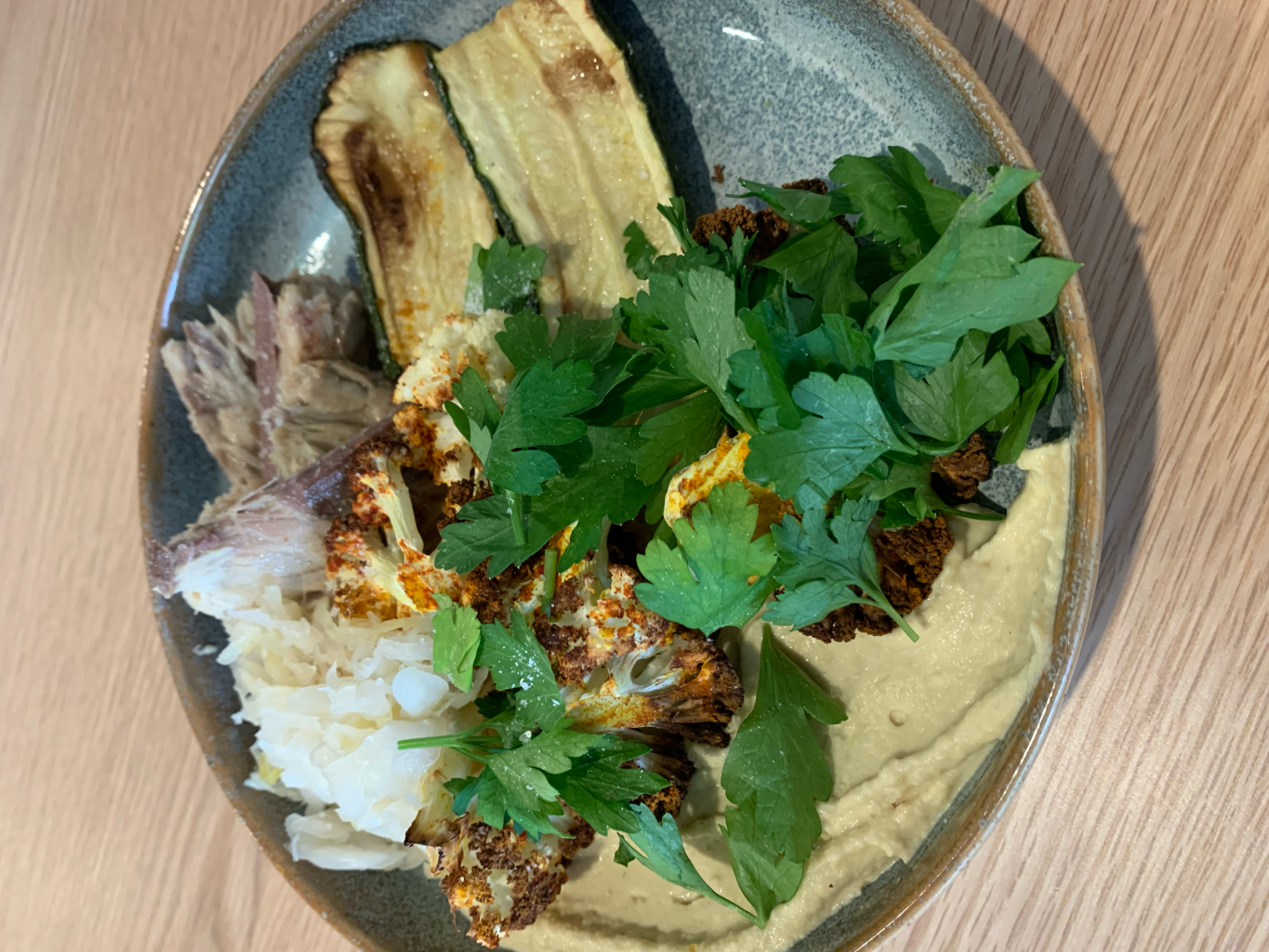
Let’s start by eating our way there….
- Fermented foods are a winner for populating your gut with beneficial flora.
- Feed your gut with probiotics; raw garlic, onion, asparagus, green banana and fibre are all excellent examples.
- Eating a diverse range of plants! 30/ week is the gold standard and this may sounds tricky at first but sprinkling extra herbs and spices here and there, getting creative with seed and nut mixes on your porridge and asking whats good and in season at your local grocer will come together to see you to this number comfortably.
- Eating foods rich in the nutrients that further support your gut health such as MCTs, omega 3s, vitamin d, c and zinc. The bowl to your left features a diverse range of plants, fermented foods, tinned mackerel and a garlicky, lemony, homemade hummus as an example.

Exercise your way there!
- Weight training and getting your heart rate up shows consistent benefits for gut health and immune system and assisting you to find balance from stress. Improve blood flow and cardio health, aid your mitochondria (the power house of your cells) to boost and enhance all metabolic functions within your body, improve hormones, sleep and cell signalling that needs to happen in order for your immune system to operate effectively. There is simply no replacement for the mental and physical feel good factor of exercise.

Destress your way there.
We all know how it feels to eat in a stressed out rush, that bloating feeling that comes later and most of us have experienced the flu that hits us when we feel at our most burn out from work or other life stresses. Taking time to get outside and connect with others in the sunshine is vital to keeping yourself on kilter to avoid the damaging effects stress has on your body.
If you need someone on your team who understands nutrition and exercise to get you going this winter season, click the button to find out more!
Further reading and resources:
Boyers, L. (2014). The Everything Guide to Gut Health : Boost Your Immune System, Eliminate Disease, and Restore Digestive Health. F+W Media.
Calder, P. C., & Yaqoob, P. (Eds.). (2013). Diet, immunity and inflammation. Woodhead Publishing.
García-Montero, C., Fraile-Martínez, O., Gómez-Lahoz, A. M., Pekarek, L., Castellanos, A. J., Noguerales-Fraguas, F., Coca, S., Guijarro, L. G., García-Honduvilla, N., Asúnsolo, A., Sanchez-Trujillo, L., Lahera, G., Bujan, J., Monserrat, J., Álvarez-Mon, M., Álvarez-Mon, M. A., & Ortega, M. A. (2021). Nutritional components in western diet versus mediterranean diet at the gut microbiota-immune system interplay. implications for health and disease. Nutrients, 13(2), 1–53. https://doi.org/10.3390/nu13020699
Gleeson, M. (2006). Immune function in sport and exercise. Churchill Livingstone Elsevier.
Leutholtz, B. C., & Ripoll, I. (2011). Exercise and disease management (2nd ed.). CRC Press. https://doi.org/10.1201/b10856
 SaeYond Health