We often think about cardio and heart health, training lower body or training upper body. We are starting to think about the need to train our balance and stability systems. Why? Real life examples of a failure of the stability system include: non-contact ACL injuries, inability to carry an awkward load or simply, a fall. An inability to take force or load through your muscles will result in that force being transferred into joints and from there, pain or dysfunction. Balance should be trained as an authentic movement, something can feed into and enhance your existing patterns. By that I mean, struggling to get into your pants one leg a time when you get changed? You don’t have to. Training can help you move better in all sorts of day-to-day situations.
It is a fluidity reaction, the ability to displace centre of mass within basis of support, regardless of basis of support. In other words, if you get knocked off a curb at a busy cafe, being able to catch yourself from a fall. If you get shoved accidentally or trip on a rogue toy it is so empowering to feel your stabilisers switch on and reaction system catch you from falling and hurting yourself. To be able to transform easily from one position to the next is a worthwhile pursuit.
Can I still train for strength whilst developing my balance foundation?
Your foundation is worth investing time into. How would you feel living in a house where the builder’s rushed and missed laying the foundation to save themselves a few months on project delivery? Would you be impressed with the car manufacture who skimped on safety features, opting for a more powerful motor? In saying that, doing “closed chain exercises” such as leg presses and other exercises on machines are a great way to protect your joints and move through a safer range of motion whilst building up strength and muscle mass. If you are starting out then maybe this looks like: 50% of your time is focused on building the foundation and 50% on strength, shifting this to 40/60 or 30/70 as you go. High quality personal training can help you with deciding how to prioritise your precious time.
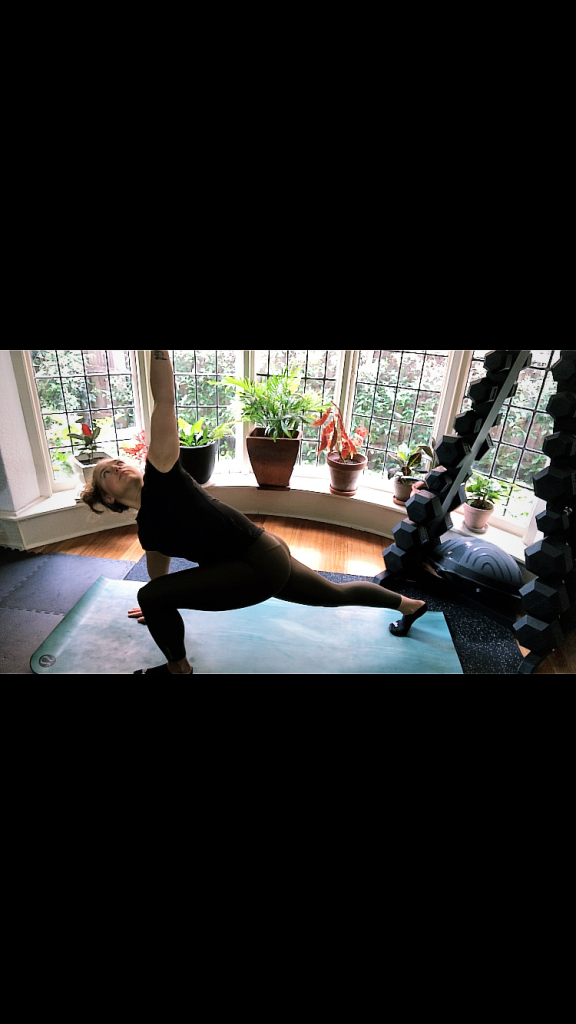
Accessible Exercises
Simply putting yourself through exercise where balance is required is a great start. See a chair? Attempting, or just trying to get close to sitting up or down on one leg (with due care and safety measures taken). The balance system and your stability though is worthy of strategy and effort, of being integrated into a well designed program.
Yoga offers fantastic balance training but does not necessarily strengthen your stabilisers. A strength program with well integrated balance specific, stabiliser strengthening, eccentric, controlled loading and functional exercise is the ideal.
Training a strong core to act as a shock absorber and support your body through shifts in direction and movements is the tip of the iceberg, it is not the only stabiliser you want to train. If this sounds overwhelming, take heart. Reading this is a great start, starting small or taking any steps from here is better than nothing.
The below is five to seven minutes worth of training you could do anywhere to improve your balance and aid your longevity. There are many more I would have loved to have included such as farmer’s carry step ups, sled pulls, inch worms and more but these offer a solid start. The exercises are ordered from easiest to hardest.
Start with one set of each, start small, and remember: consistency over perfection.

Bird-dogs
1-3 sets 6-10 reps/side
Ensure good support for your knees and shoulder is stacked over wrist. From the quadruped position, reach alternate arm and leg long.
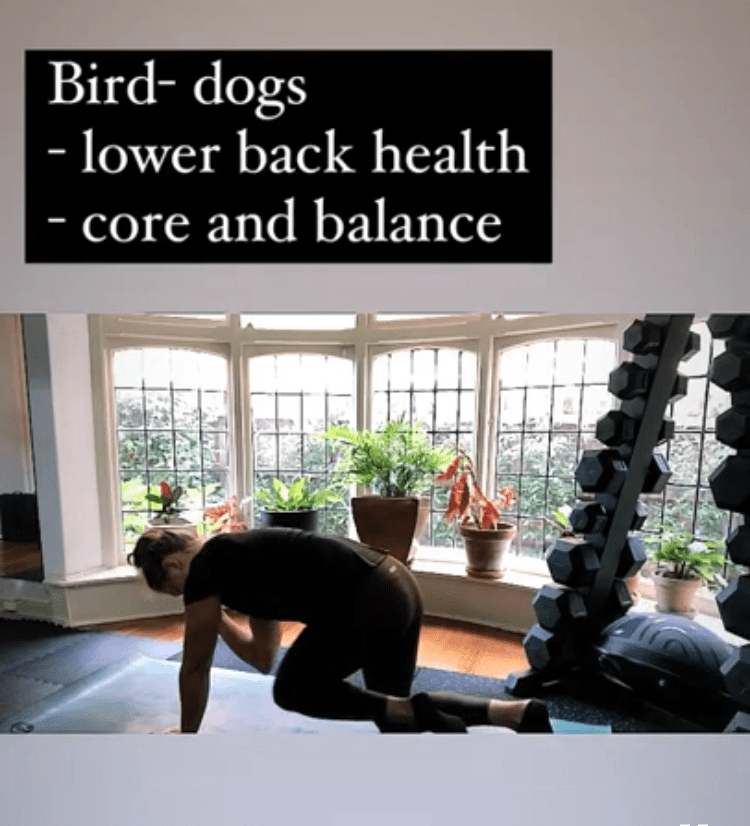
Then pull them in, attempting to connect elbow to knee and bracing core as you do so.

Side plank with reach
1-3 sets, 4-8 reps
Brace your shoulder muscle to protect it. If you need an easier version, try dropping to your hips and maintaining strength and alignment through the upper portion of your body.
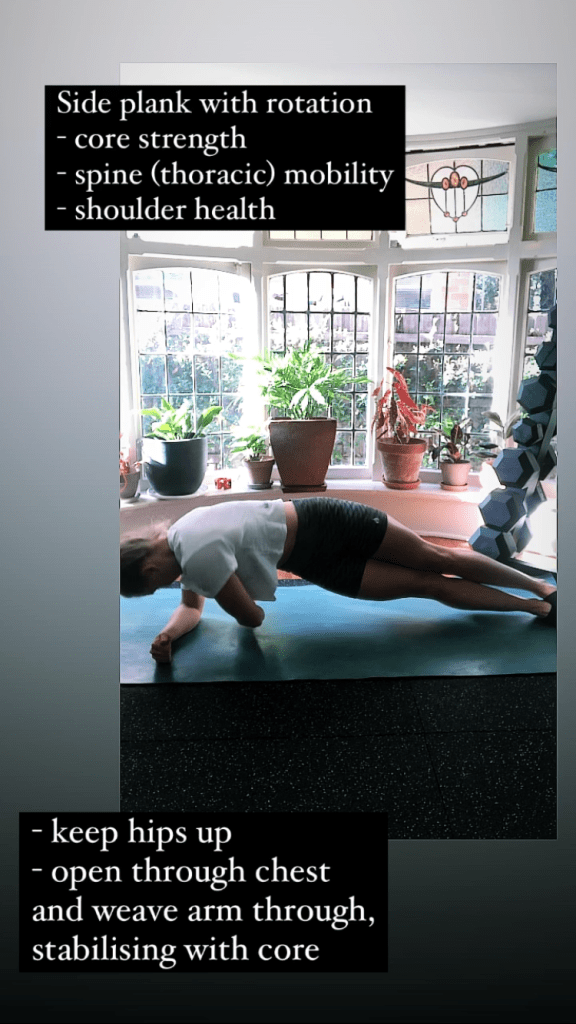
If you feel confident, attempt to reach through, bracing core and keeping hips forward.
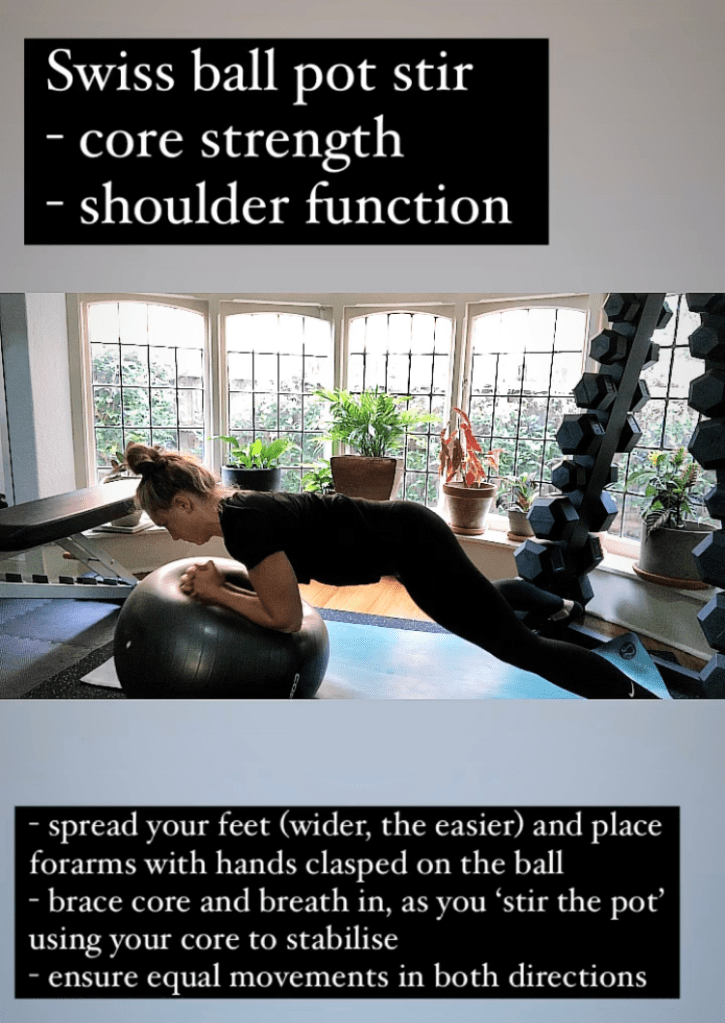
Swiss ball pot stir
Have fun with this one! Trying writing your name out with your fists as you move the ball around and stabilise. Or try to ‘stir’ the ball a few times in each direction 1-3 sets.
keep bracing your back muscles to stabilise your shoulders.

If you would like to enjoy the benefits of a strong and stable system then reach out for a custom designed program from a passionate coach.
 SaeYond Health